
Spirometry
What is spirometry?
Spirometry (pronounced “spy-rom-uh-tree”) is a common type of pulmonary function test. Another name for a pulmonary function test is a lung function test. A spirometry test measures the flow of air through your lungs and estimates the amount of air in your lungs. It also tells your healthcare provider how strong your lungs are and how well you breathe.
Spirometry is safe. Healthcare providers commonly order it to evaluate lung function.
Why is spirometry performed?
Spirometry determines if your lungs are functioning at their expected levels. It also helps to diagnose lung and airway diseases, including:
- Asthma.
- Chronic obstructive pulmonary disease (COPD).
- Cystic fibrosis.
- Pulmonary fibrosis.
Spirometry can also:
- Determine your lung capacity.
- Measure changes over time that occur as a result of chronic lung diseases.
- Identify early changes in your lung function and, in some cases, help guide treatment.
- Detect narrowing of your airways.
- Decide how likely it is that inhaled medications may help with your symptoms.
- Show whether exposure to certain substances has altered your lung function.
- Estimate your risk of respiratory complications before undergoing surgery.
When would spirometry be needed?
Your healthcare provider may order spirometry if you have symptoms of lung or airway conditions. Some symptoms in which your healthcare provider may order spirometry include:
- Chest tightness, pain or pressure.
- Coughing, especially coughing with mucus.
- Difficulty taking a deep breath.
- Shortness of breath (dyspnea).
- Wheezing.
How does spirometry work?
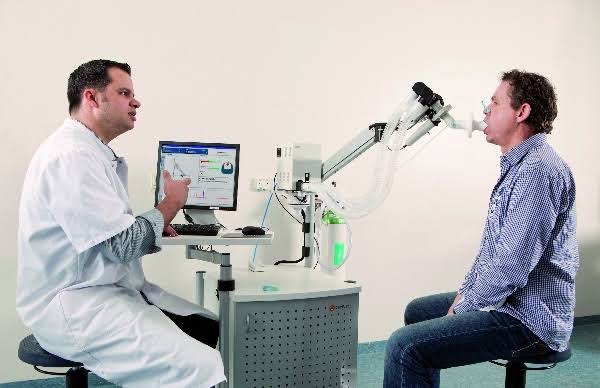
Spirometry uses a machine called a spirometer. A spirometer is a medical device that consists of a mouthpiece that connects to a computerized machine that measures your airflow.
How do I prepare for a spirometry test?
Before your test, your healthcare provider may ask you to:
- Stop taking your breathing medications for a short period.
- Wear loose, comfortable clothing that doesn’t squeeze your chest.
- Refrain from eating a large meal at least two hours before the test.
- Avoid any heavy exercise at least 30 minutes before the test.
- These precautions help ensure that your spirometry results are more accurate.
How is a spirometry test performed?
Your healthcare provider may conduct your test at an office or in a special lung-function laboratory. They’ll place soft clips on your nose. The clips help you breathe in and out only through the mouthpiece attached to the spirometer.
You’ll then take a deep breath in and blow forcefully into the spirometer through the mouthpiece. The spirometer measures the amount of air you blow out of your lungs and the amount you inhale back into your lungs.
You’ll repeat the test at least three times to ensure your results are accurate and reproducible.
Your healthcare provider may also ask you to breathe in a medicine that helps open your airways. You’ll then perform testing on the spirometer again. Your healthcare provider will compare the results of your tests before and after you inhaled the medicine. They’ll then decide if they can use the medicine in your treatment plan.