Lung Cancer
Lung Cancer
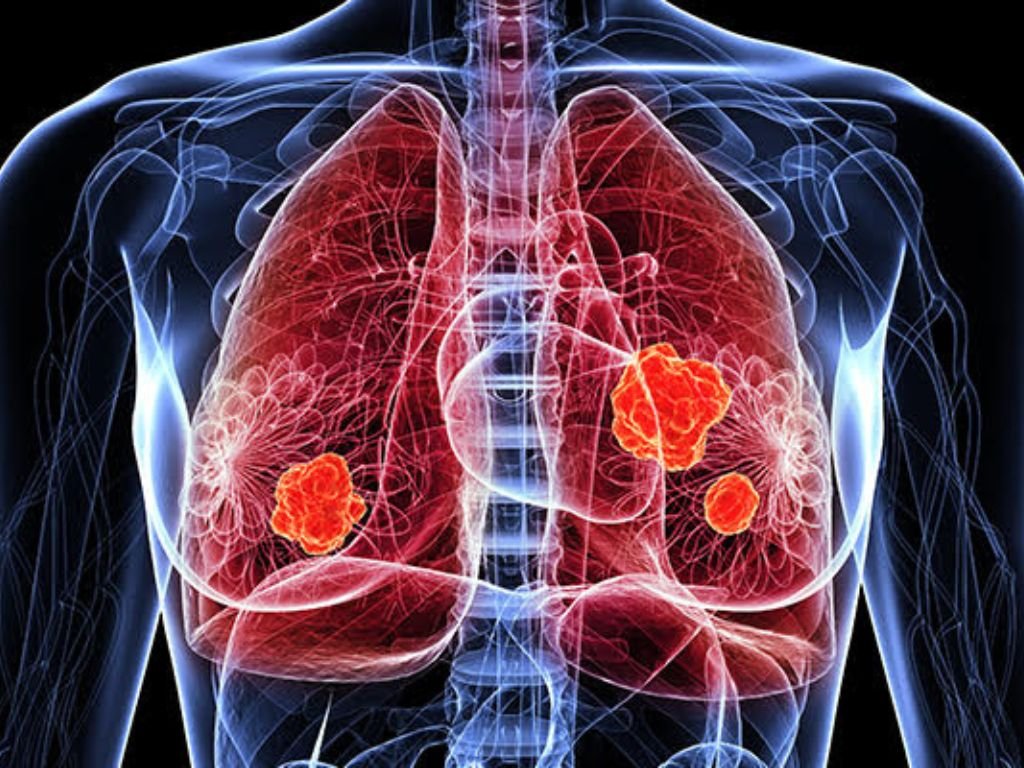
Lung cancer is a disease caused by uncontrolled cell division in your lungs. Your cells divide and make more copies of themselves as a part of their normal function. But sometimes, they get changes (mutations) that cause them to keep making more of themselves when they shouldn’t. Damaged cells dividing uncontrollably create masses, or tumors, of tissue that eventually keep your organs from working properly.
Lung cancer is the name for cancers that start in your lungs — usually in the airways (bronchi or bronchioles) or small air sacs (alveoli). Cancers that start in other places and move to your lungs are usually named for where they start (your healthcare provider may refer to this as cancer that’s metastatic to your lungs).
What are the types of lung cancer?
There are many cancers that affect the lungs, but we usually use the term “lung cancer” for two main kinds: non-small cell lung cancer and small cell lung cancer.
Non-small cell lung cancer (NSCLC)
Non-small cell lung cancer (NSCLC) is the most common type of lung cancer. It accounts for over 80% of lung cancer cases. Common types include adenocarcinoma and squamous cell carcinoma. Adenosquamous carcinoma and sarcomatoid carcinoma are two less common types of NSCLC.
Small cell lung cancer (SCLC)
Small cell lung cancer (SCLC) grows more quickly and is harder to treat than NSCLC. It’s often found as a relatively small lung tumor that’s already spread to other parts of your body. Specific types of SCLC include small cell carcinoma (also called oat cell carcinoma) and combined small cell carcinoma.
Other types of cancer in the lungs
Other types of cancer can start in or around your lungs, including lymphomas (cancer in your lymph nodes), sarcomas (cancer in your bones or soft tissue) and pleural mesothelioma (cancer in the lining of your lungs). These are treated differently and usually aren’t referred to as lung cancer.
Symptoms of Lung Cancer
Lung cancer is generally diagnosed on a chest X-ray, which is done for other reasons or as part of a health check-up. The associated symptoms of lung cancer include:
- Persistent cough
- Blood in sputum (spit or phlegm)
- Shortness of breath–either on exertion or at rest
- Chest pain
- Change in voice
Early detection is essential for improving survival rates, and regular check-ups with a lung cancer specialist in Salem are highly recommended for those at risk.
Risk Factors of Lung Cancer
- Tobacco smoking (causes 60-65 per cent of lung cancers)
- Exposure to second-hand or passive smoking
- Exposure to radon gas, asbestos and other carcinogens
- Family history of lung cancer
The cost to treat lung cancer in India may vary based on the complexity of treatment, but early intervention often leads to better outcomes.
Stages of Lung Cancer
Stage I: Cancer is confined to lung
Stage II/III: Cancer is confined to chest
Stage IV: Cancer spreads to other organs (lymph nodes, brain, liver, adrenal glands)
Diagnosis of Lung Cancer
Over 80 per cent of lung cancers have a chance to be cured if detected early. Lung cancer is diagnosed in the following ways:
Primary diagnosis
Chest X-ray or a CT scan
Secondary diagnosis
Bronchoscopy, EBUS (Endobronchial Ultrasound) or CT-guided biopsy for obtaining tissue from the tumour
Advanced diagnosis
PET CT whole body, MRI, Mediastinoscopy and other surgical procedures
Lung Cancer Treatment
Treatment for lung cancer depends on the type, stage, and overall health of the patient. Common options include:
Stage I/II
Surgery can be considered. Our Centre for Cancer offers advanced surgical techniques with better recovery outcomes.
Stage III
Combination of surgery, chemotherapy and radiation therapy may be required to shrink tumors before surgery
Stage IV
Chemotherapy, oral targeted therapy, immunotherapy and radiation therapy are treatment options