
Chest Tube Thoracostomy
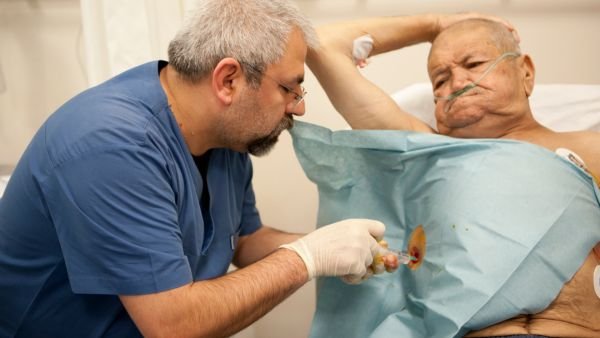
Chest Tube Thoracostomy
Chest tube thoracostomy involves placing a hollow plastic tube between the ribs and into the chest to drain fluid or air from around the lungs. The tube is often hooked up to a suction machine to help with drainage. The tube remains in the chest until all or most of the air or fluid has drained out, usually within a few days. The procedure is ideally done by a pulmonologist who is also a pleural effusion specialist in Salem
Why Do I Need a Chest Tube?
Common reasons why a chest tube is needed include:
Collapsed lung (pneumothorax) – This occurs when air has built up in the area around the lungs (the pleural space) from a leak in the lung. This leak may be the result of lung disease. It can also occur as a complication of certain medical procedures, Trauma. Chest tubes are often needed to remove air from around the lung. Failure to remove such air can be life-threatening if there is a lot of air or a continued leak. Removing the air allows the lung to re-expand and seal the leak.
Pleural effusion – An infection can sometimes cause fluid to build up around the lung and may be necessary to insert a chest tube to remove the fluid. Getting the fluid out can at times help clear the infection faster. A culture can Salem.
Cancer – Some cancers spread to the lung or pleura (lining of the lung). This can cause large amounts of fluid to build up around the lung. Doctors usually drain the fluid with a needle. If the fluid keeps coming back, however, it may be necessary to insert a chest tube to first drain the fluid, and then deliver special medicines into the chest that reduce the likelihood of the fluid building up again.
Chest Surgery – Sometimes a chest tube is left in place after surgery. The surgeon can usually tell you if it will be needed and how long it may need to stay in.
Risks of Chest Tube Insertion:
Below are listed some risks of chest tube thoracostomy. It should be noted that the risk of serious complications (bleeding and infection) is uncommon (usually less than 5% of cases). Your healthcare provider will explain the risks and how likely they may be for you when you give consent for the procedure.
Pain during placement: Discomfort often occurs as the chest tube is inserted. Local numbing medicine is used to help reduce any pain or discomfort. The discomfort usually decreases once the tube is in place.
Bleeding: A blood vessel in the skin or chest wall may be nicked as the tube is being placed. Bleeding is usually minor and stops on its own. Rarely, bleeding can occur in or around the lung and may require surgery. Usually, bleeding can just be watched with the chest tube in place.
Infection: Bacteria can enter around the tube and cause an infection around the lung. The longer the chest tube stays in the chest, the greater the risk for infection. The risk of infection is decreased by special care in bandaging the skin at the point where the tube goes into the chest.
Leak of Air into skin: It occurs due to leaking of air from pleural space into the skin and subcutaneous tissue.
Chest tube insertion
Fluid or air in the chest that needs to be drained is identified using chest imaging such as chest X-ray, chest ultrasound, or chest CT scan. If the X-ray shows a need for a chest tube thoracostomy to drain fluid or air, the procedure is likely to be done by a surgeon, a pulmonary/critical care physician, or an interventional radiologist.
Often an adult or older child remains awake when a chest tube is inserted, except when it in place in the operating room during an open chest procedure. Sometimes a person, particularly a younger child, is given a small amount of medicine (a sedative) that causes sleepiness before a chest tube is inserted. The skin will be thoroughly cleaned. A local anesthetic (numbing) medication will be injected into the skin and in the tissue along the path between the ribs that the tube will follow. A cut (incision) from ¾ inch to 1½ inches long, between the ribs (the exact location depends on what is being drained and its location in the lungs). The chest tube is inserted and will be stitched into place to prevent it from slipping out. An airtight sterile dressing bandage is placed over the insertion site. The chest tube will be connected to a drainage collection device (usually a clear plastic container that rests on the floor). Often it is attached to suction to help draw out the air or fluid. Get treatment for pleural effusion by Dr Parthiv Shah- Pleural effusion specialist in Salem.
What happens when the chest tube is in?
Most people will need to stay in the hospital the entire time the chest tube is in. You will be checked often for possible air leaks, plugging of the tube, and any breathing problems you may be having. Usually, you will be able to breathe more comfortably with the tube in place. Sometimes pain around the area where the tube enters the chest may cause you to take more shallow breaths. The nurse or doctor will tell you how much you can move around with the chest tube in place. Less and less fluid drainage in the collection device often means your lungs are improving. Sometimes the tube is clamped and left in place to make sure no fluid or air comes back before it is pulled out.
If you are going to have a CPAP study, the technician will help you select a mask most comfortable for you to wear during the study. Usually, the mask just covers your nose. After the electrodes are placed, you can relax until the technician is ready to have you go to sleep. Your sleep and breathing will be monitored for the entire study. If you need to get out of bed to go to the bathroom, you can alert the staff and they will help you. Most centers will wake you after the study is completed. The sleep center will provide you with a list of things to bring, depending on whether the study will be held overnight or during the day. They will also give you a list of what to do and not do.
If you are doing the study at home, you may either be given portable equipment by the clinic or a technician may bring it to your home. If you are given the equipment to take home, you will be instructed on how to set it up. This equipment is generally easy to set up and use. You will get instructions on how to turn it in when the study is done.
Will there be any pain or possible complications when the chest tube is removed?
When the doctor determines that you no longer need the chest tube, it will be removed. Usually, it can be taken out right at your bedside. There rarely is a need for sedation medication. You will be told how to breathe as the tube is being pulled. A secure bandage will be put in place. You will be told when the bandage can be removed. Often, a follow-up chest X-ray will be done to make sure that fluid or air hasn’t come back. Generally, there are no complications from the chest tube once it has been removed. You will only have a small scar. Chest tube insertion is a relatively safe procedure when done by Dr.R.Velraj who is a pleural effusion specialist in Salem.
What happens after my sleep study?
Your data will be read by a sleep study doctor and a final report will be sent to your healthcare provider after the study. You should schedule a follow-up visit with your healthcare provider to discuss the results of your study and any treatment that is needed. If the sleep study shows that you need treatment, your healthcare provider will advise you what you should do. Your healthcare provider will order the equipment you need, arrange training on how to use the equipment, and schedule any more tests that may be needed.